Morning Star Community
The harsh climate of the Great Plains in South Dakota is a force that affects everyone in the area. Extreme weather conditions, such as tornadoes, hailstorms and excessive snow accumulation, can make roads impassable for weeks and cause power outages in above-ground grids. The majority of housing on the Lakota reservations was provided by HUD and designed for Arizona’s more temperate climate without the tribe’s input. This has left Cheyenne River residents more vulnerable to climate extremes.
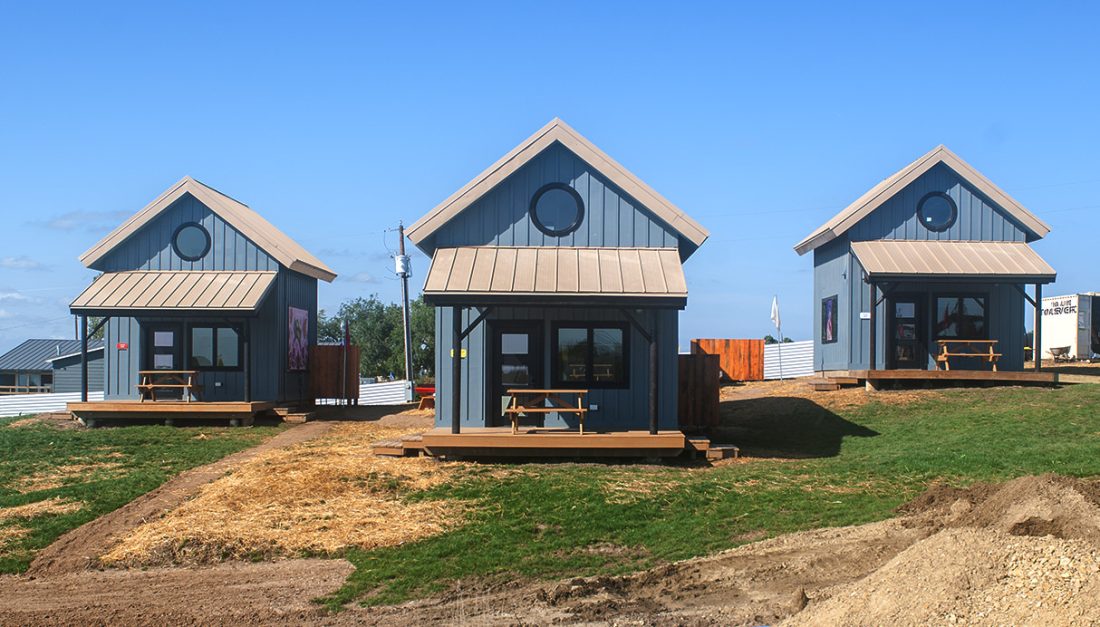
To build tiny homes on the 4th largest land-based reservation is to build for the sustainable future of a nation. This is not a quick fix for a long-term problem, this is the beginning of strategic planning for a long-term solution, this is nation building. It is our hope that the tiny homes will have a positive impact in the community by providing safe and supportive spaces, as individuals and families work toward goals of homeownership.
–
Alli J. Moran
Cheyenne River Lakota
Chairwoman, Sioux YMCA Board of Directors
The Morning Star Tiny Home Community is a space of healing, with the layout and ethos rooted in Lakota values and spirituality. The Anpao Aichahpi, Morning Star, is the brightest star in the eastern horizon. It represents the way the spirits come to the earth and serves as a connection between the living and spirit world.
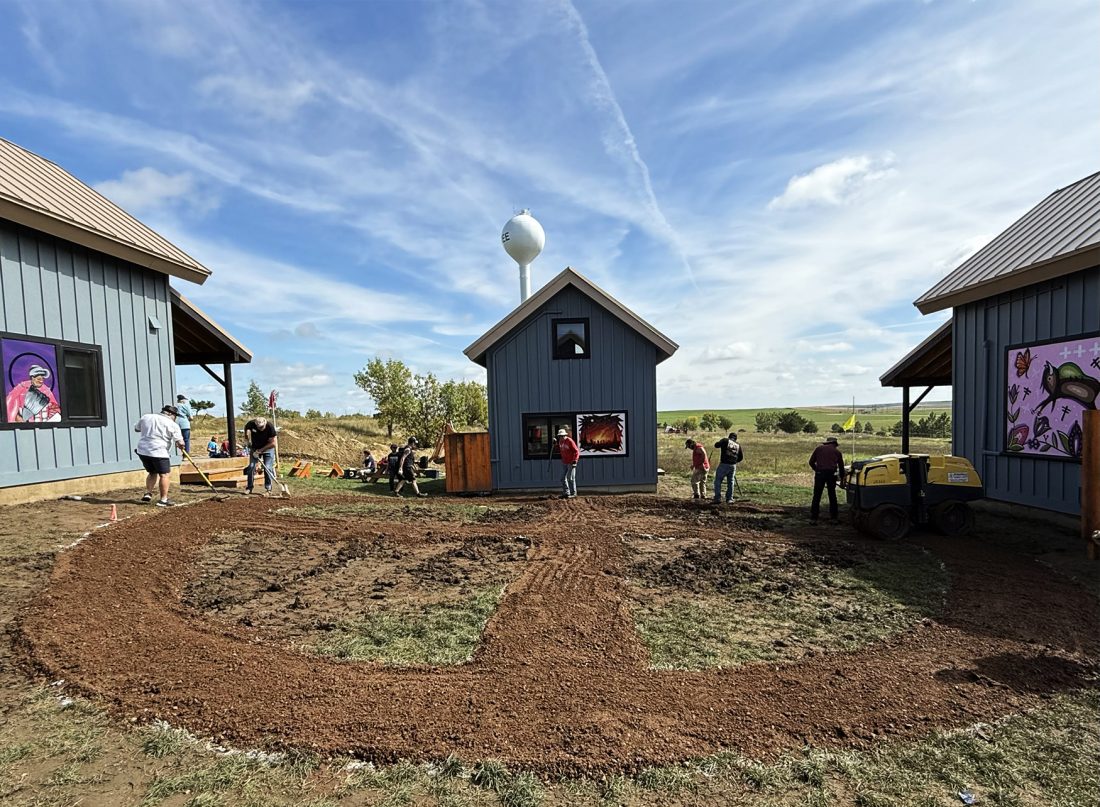
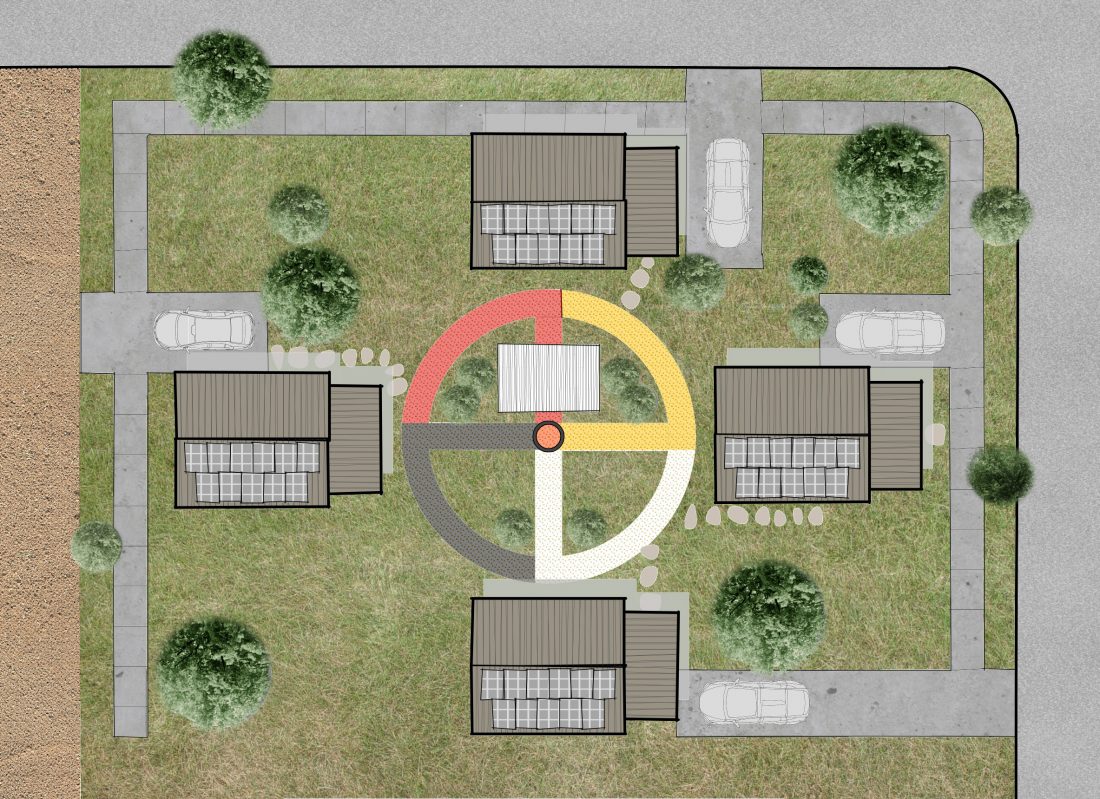
The circular site plan speaks to the traditional Lakota tipi camp layout which included entry from the east, and a community gathering space for cooking and ceremonies in the center of the structures. The pathways leading to the center gathering space are in the shape of the Medicine Wheel, a sacred symbol representing the interconnectedness of life. One of the homes is ADA accessible and the other three are adaptable. They provide opportunities for intergenerational living, which is common in Lakota culture.
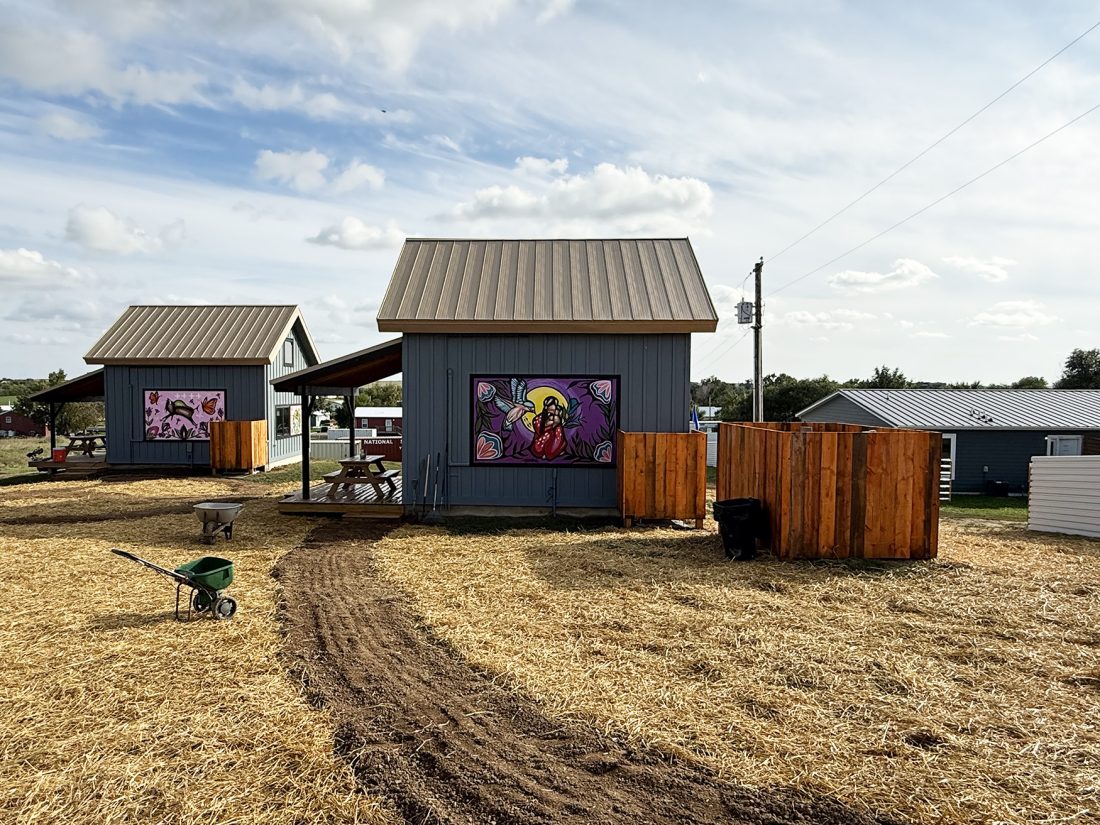
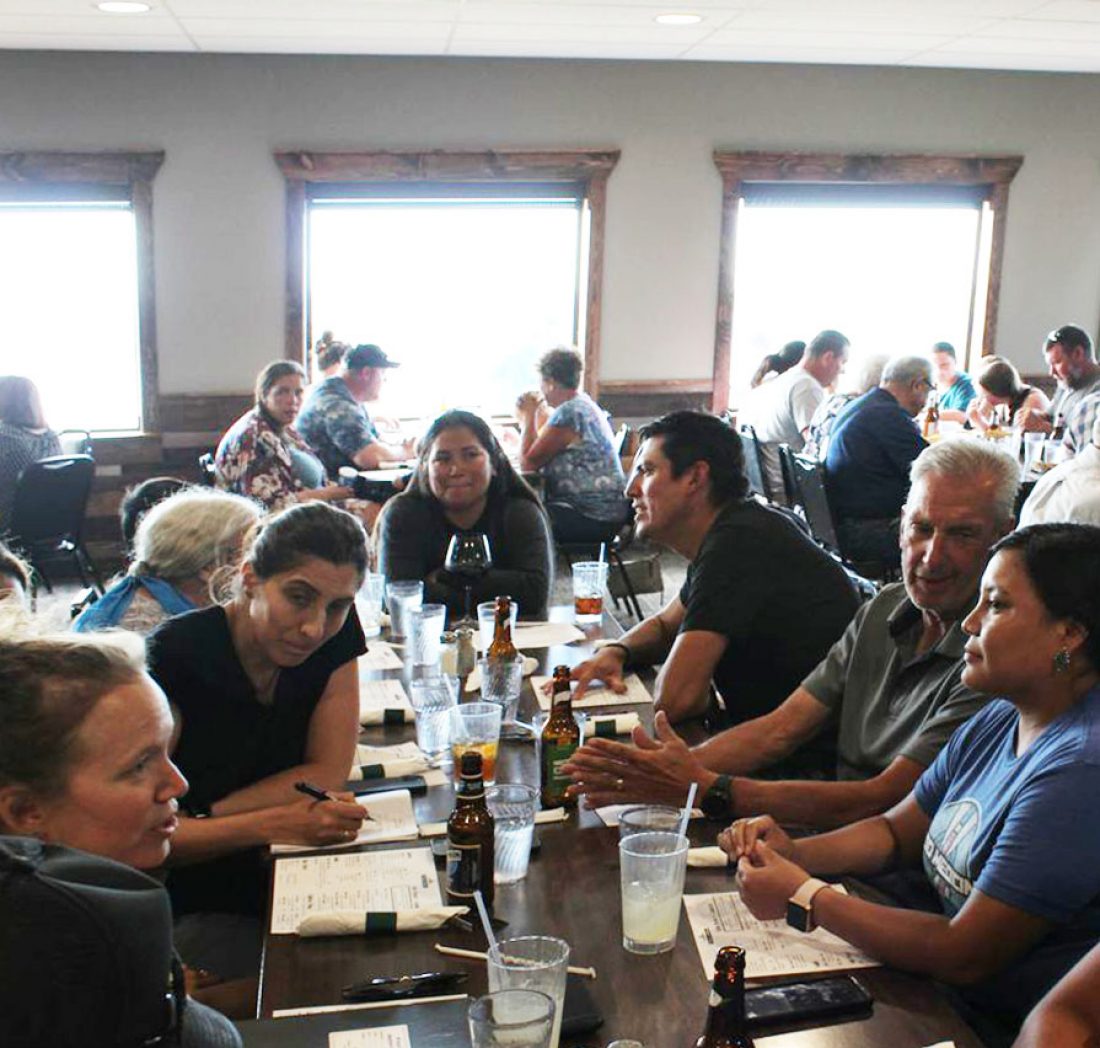
Designed through community engagement with Lakota elders and youth alike, the project offers transitional housing for community members living in overcrowded and potentially unsafe living conditions.
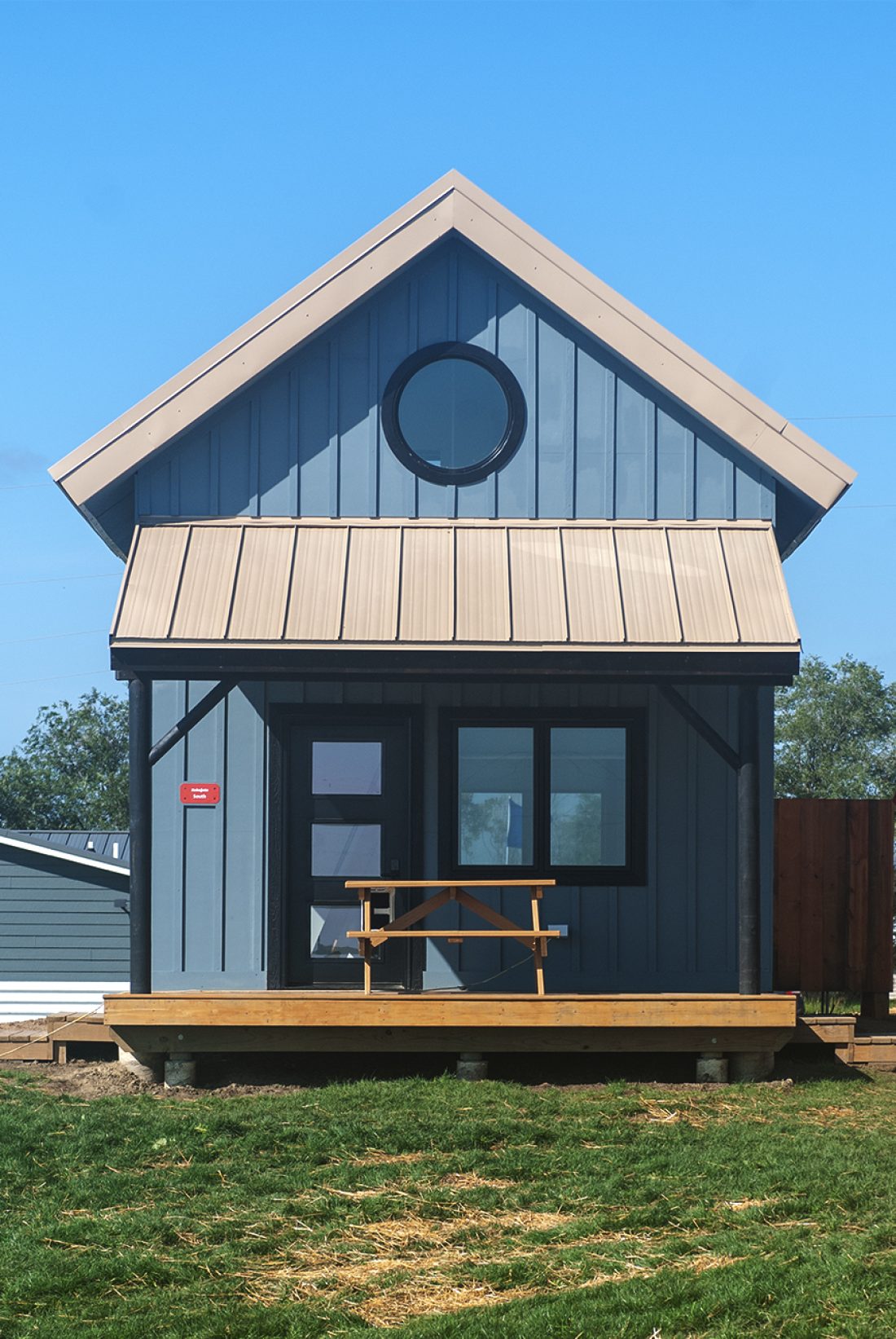
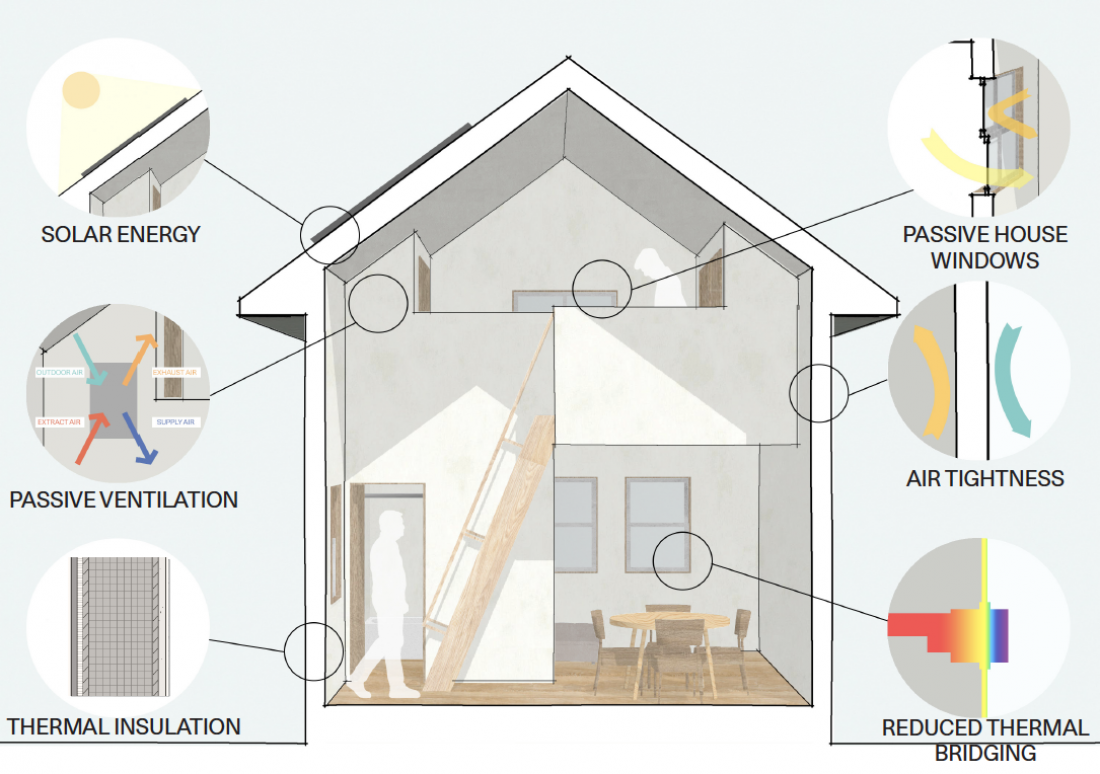
The homes are constructed with SIPs (structurally insulated panels), giving the exterior envelope a passive house insulation value to protect against the prairie’s weather extremes. The circular window above the entry speaks to the cyclical patterns in life and nature which has great significance in Lakota culture.
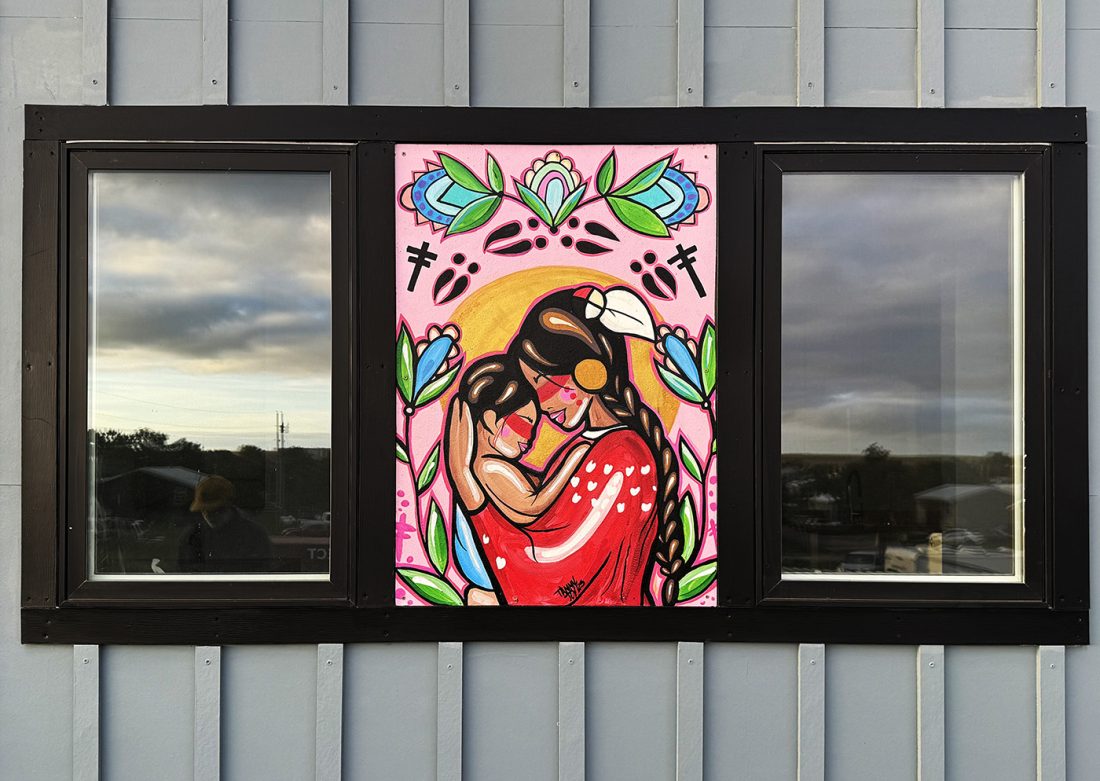
On the exterior of each building there is dedicated space where Lakota artists have created murals depicting scenes from Lakota life, culture and spirituality.
Artwork by Tammy Joy Art.
Artwork by Will Lovejoy.
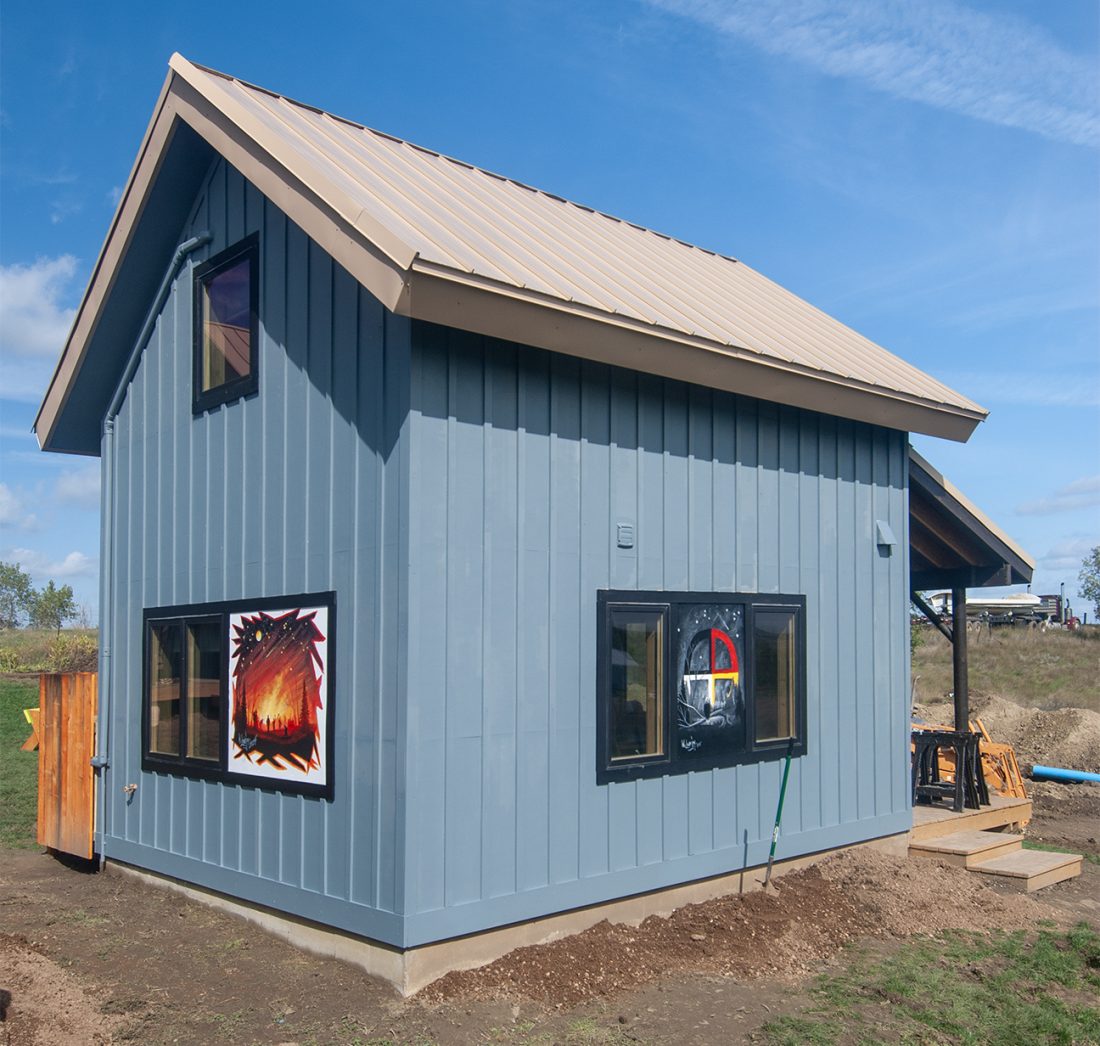
Artwork by Leland Benoist
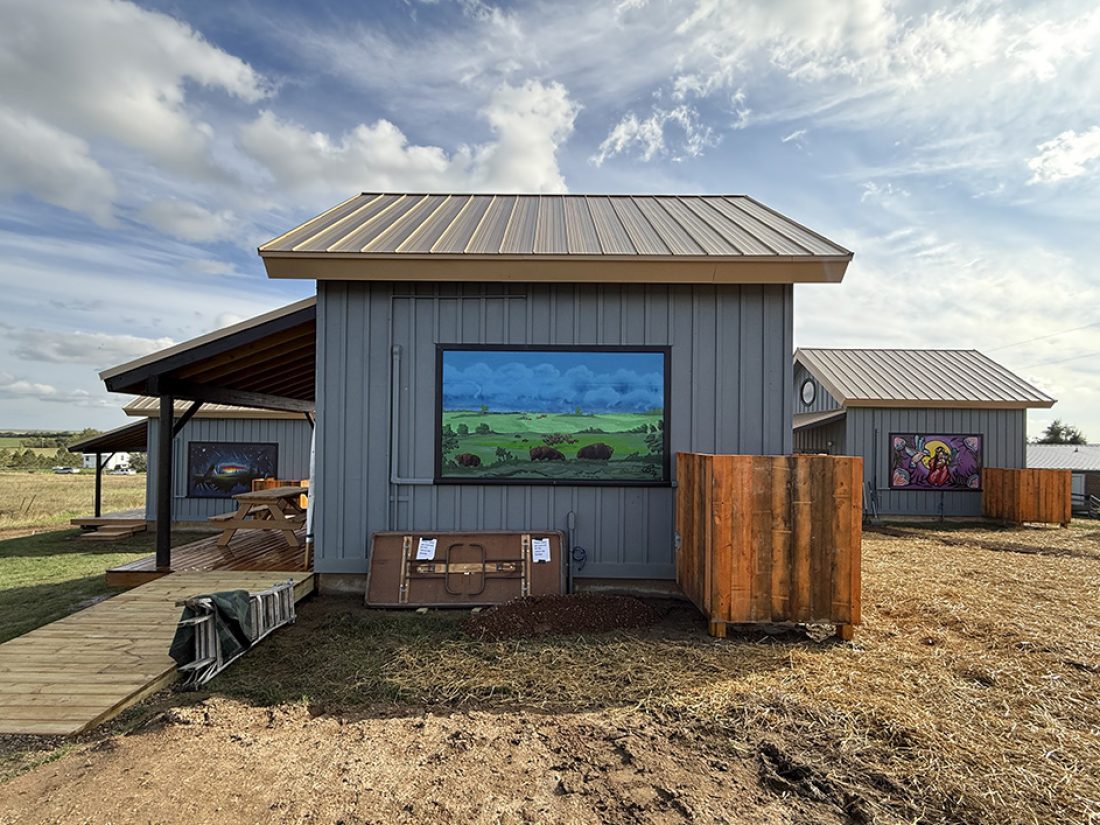
In Lakota culture, everything in our world is related – from humans to animals to plants and resources like the sun and water. Everything has a spirit. Everything is sacred. It is from this mindset that this project harnesses the inherent energy nature provides with the goal of being energy sovereign.
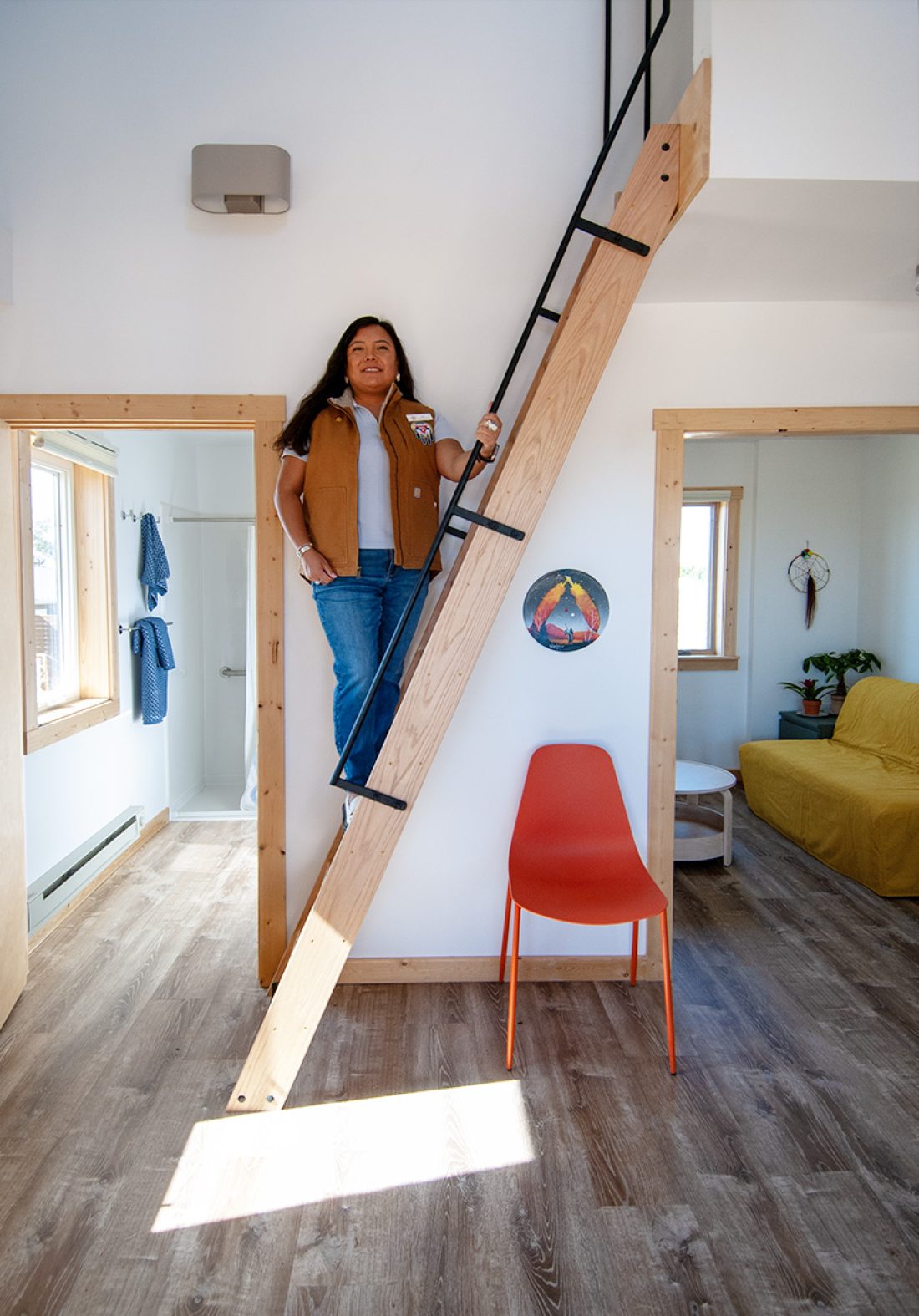
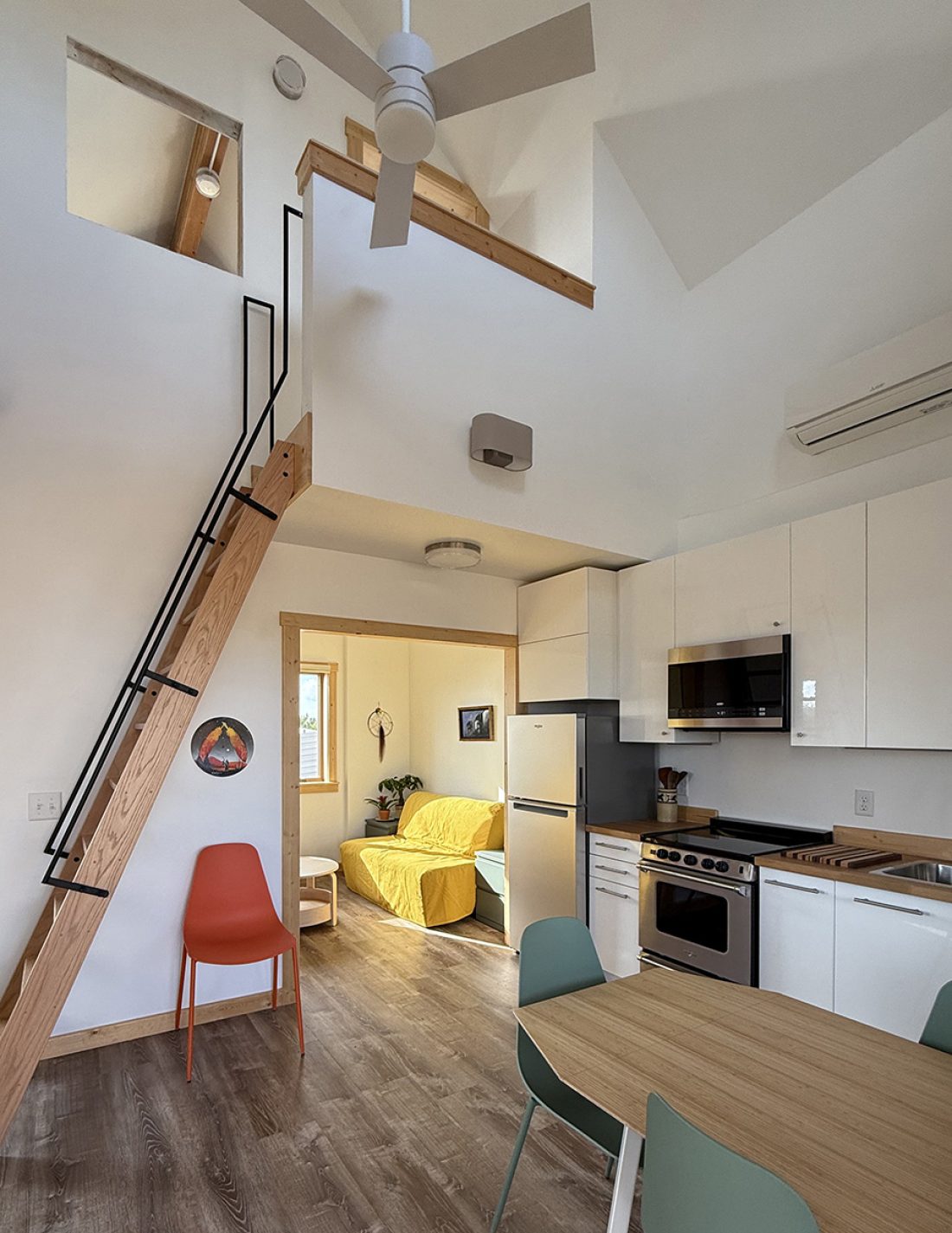
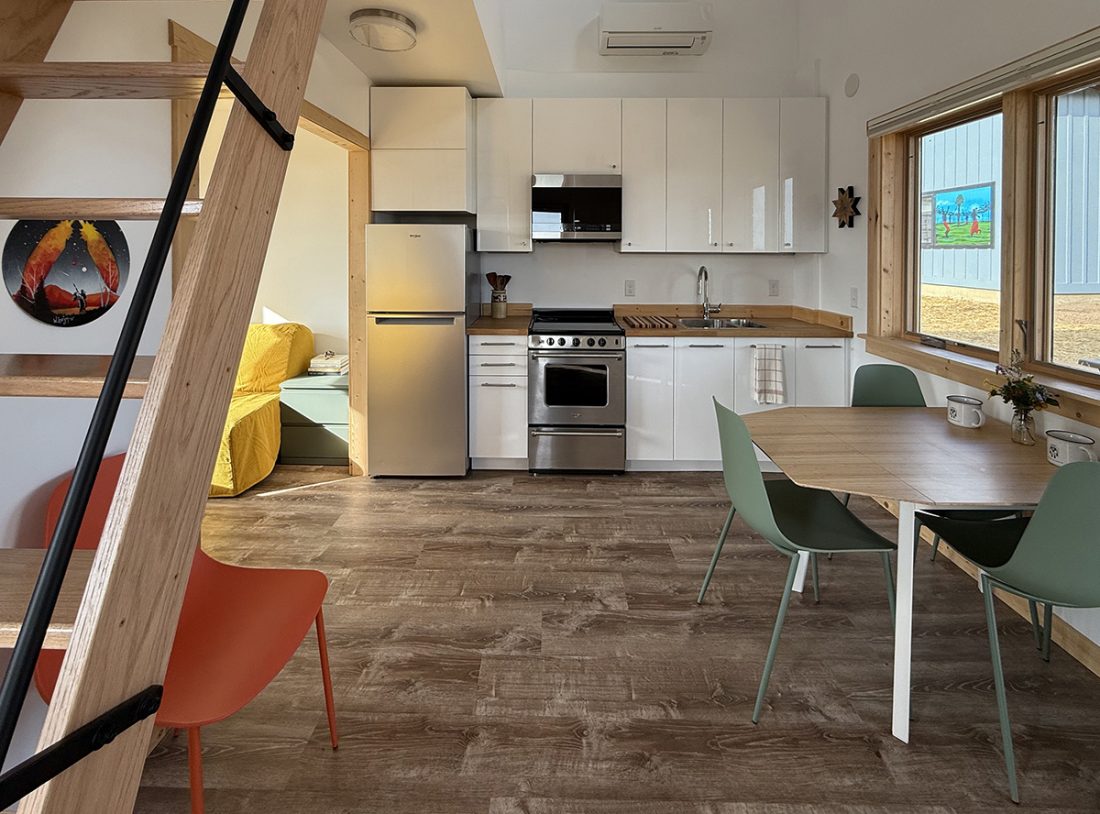
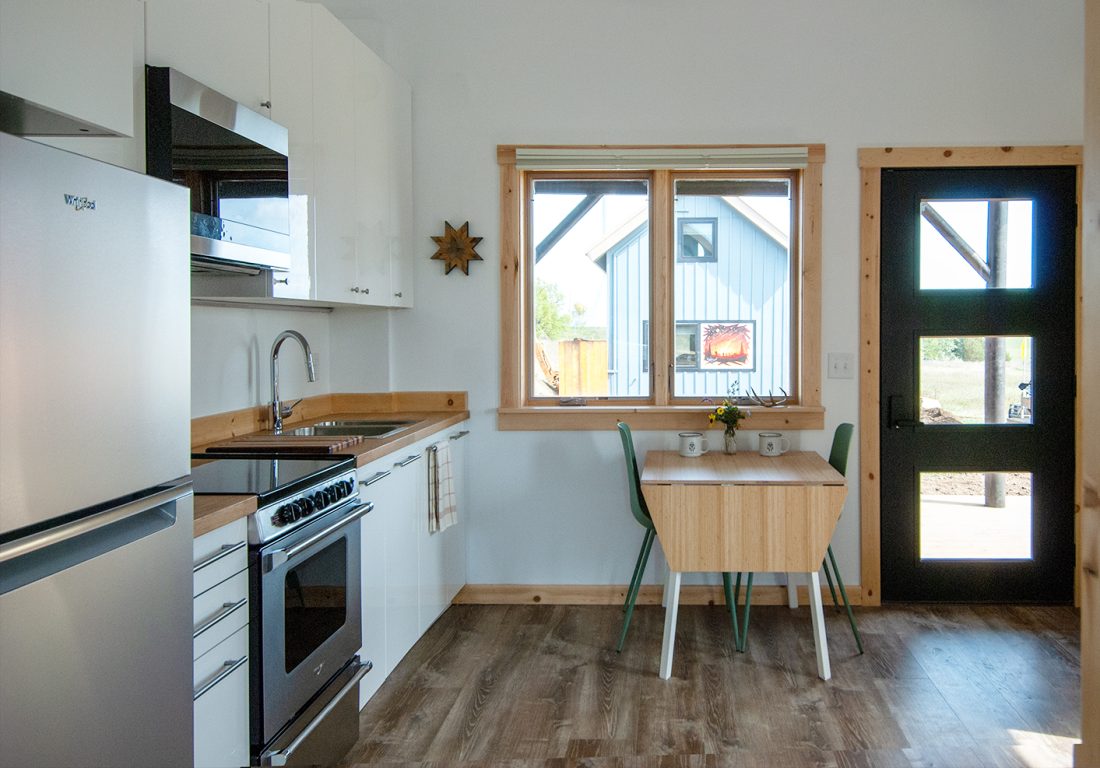
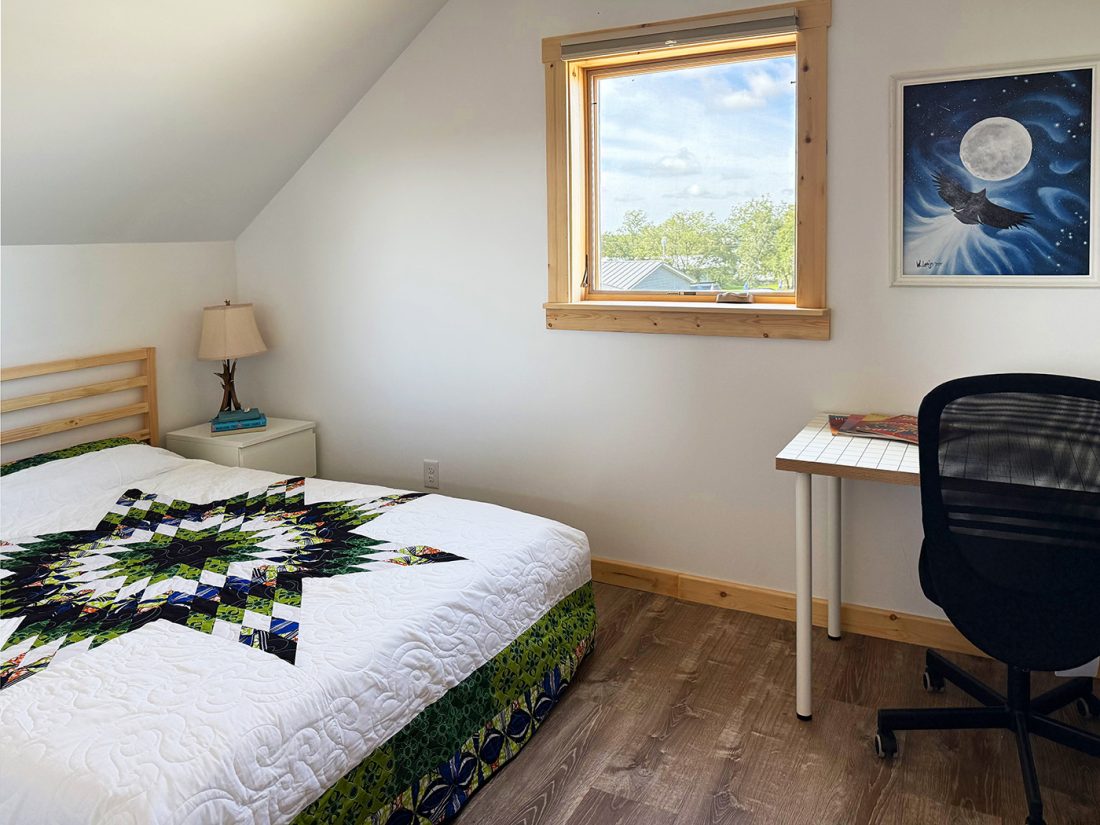
The interior of the home is compact and flexible for 2-4 people. There is a living room on the first floor with a queen futon and a sleeping loft above.
Trinity School Alumni Spotlight – Annie Coombs talks about the design and construction of the tiny homes.